Should your buffet run along one side of the tent or stand away from the edge? Compare the space the whole service needs: the table, the waiting line, the caterer’s route and the walk back to a seat. A position that looks tidy on an empty plan may become a crossing point once dinner starts.
For a Southern Oregon wedding reception or celebration, here is how to compare two arrangements before choosing your tent and furniture. These are planning options to discuss with your caterer and rental team, rather than approved floor plans.
Placing the serving tables toward one side of the tent can keep the dining area visually separate from food service. It may suit a caterer who wants a defined guest-facing side and a replenishment route behind or beside the tables.
The trade-off is the queue. If it runs along the same side as the entrance, guests arriving for dinner may meet a line of people holding plates. Moving the buffet to a different edge could help, but only if that location leaves the required exits, fabric clearances, supports and guest routes unobstructed.
Ask the caterer to show where the line begins and where staff enter the serving area. A perimeter layout still needs working space; putting tables against the edge of the canopy does not make that need disappear.
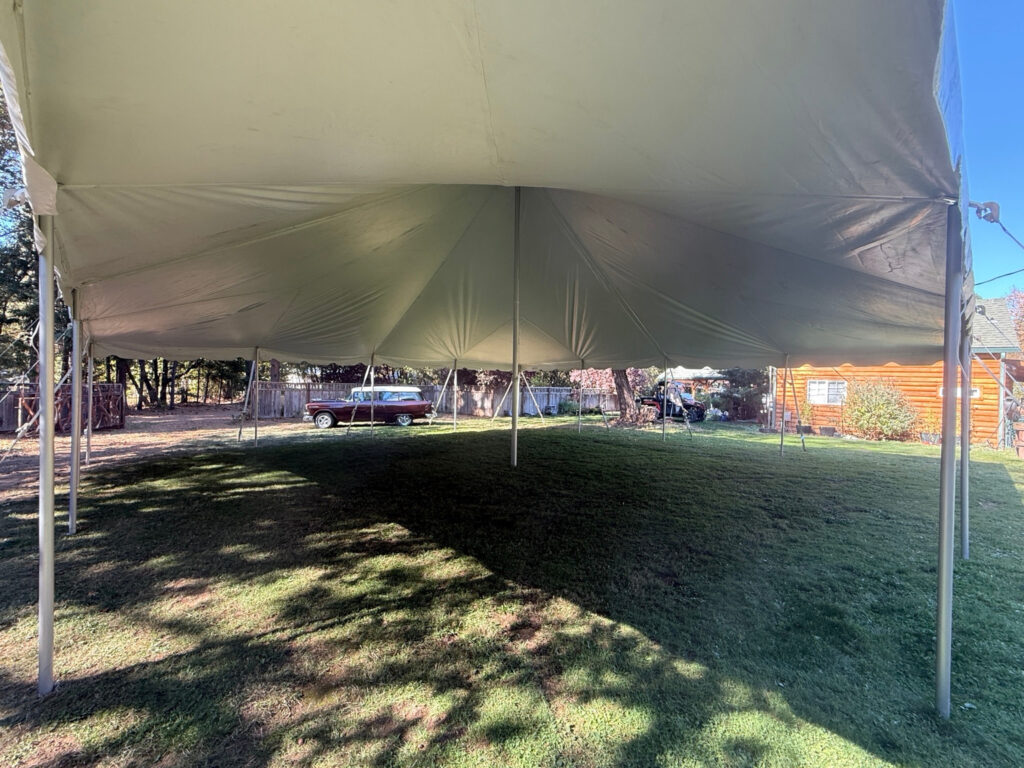
A freestanding buffet gives you more possible approach directions. It may work when the event layout has an open area that can accommodate food service without interrupting the routes between dining tables.
The trade-off is space around the station. Guests and staff may need to move on more than one side, and the line must have a clear destination. A buffet placed in the middle of the tent can become an obstacle if it sits on the direct route from the entrance to the seats.
Review the proposed position with the tent’s actual supports marked on the plan. A center pole, sidewall opening or neighboring activity may change which arrangement makes sense. Compare the layout as furnished and occupied, with chairs pulled out, rather than as empty floor space.
One-sided service gives guests one defined serving route. It may suit a perimeter position or a freestanding table with staff working on the opposite side. Check where guests collect plates, where the last dish sits and how they leave the line without turning back through it.
Two-sided service asks the layout to accommodate guests on both sides of the serving station. It may be an option for a freestanding buffet if the caterer’s menu, equipment and staffing support it. Do not assume that opening a second side will shorten the wait: plate collection, replenishment and the point where both lines finish can still become bottlenecks.
Choose the service pattern with your caterer before finalizing table quantities. Our 8-foot wood tables are one current furniture option to discuss; the equipment selected should fit the agreed service plan.
Imagine a reception with guests entering at one end of a rectangular tent, dining farther inside and collecting food from a buffet near the entrance. This is a hypothetical planning example, not a record of a particular event.
Try the perimeter version. Draw a guest leaving a dining chair, joining the line along one side, collecting food and returning to the table. Now add a late-arriving guest. If the two routes cross at the entrance, consider another buffet position or queue direction with your caterer. Keep every required exit and aisle clear.
Try the freestanding version. Move the buffet away from that edge on your sketch and draw the same journey again. The entrance might become clearer, but the serving station could now interrupt the route between dining tables. Add the caterer’s replenishment path before deciding whether the change actually improves the plan.
Compare the complete trip. The useful question is whether a guest can join the line, get food and return to a seat while staff replenish dishes and others enter. If neither version works comfortably within the required clearances and routes, revisit the tent or furniture arrangement with the team instead of squeezing the buffet into leftover space.
Cooking and heat-producing equipment need their own review; permission to serve food beneath a tent is not permission to cook there. Have your caterer, venue and rental team confirm the proposed equipment and location with the appropriate local authority. Medford’s tent permit checklist addresses cooking, heat sources and unobstructed exits.
Ask the venue and local authority to confirm required aisle widths, exit arrangements and accessibility requirements. For your rental list, count dining and service furniture separately. The wedding table and chair quantity worksheet can help organize that list once the arrangement is agreed.
Start your event quote with your date, city and approximate guest count. Tell us whether you are considering perimeter or freestanding food service, and what else needs to fit under cover. You do not need to choose the layout before contacting us; we can help you compare the rental options as your reception plan takes shape.
Provide an email address here to recieve our free party planner!
If you are taking measurements for a structure such as a building or fence, please provide the height of the structure here. If height does not apply to the wash, for instance for a gutter wash, leave this field empty. Please note if you enter a value here after taking measurements, you will need to take measurements again.
